
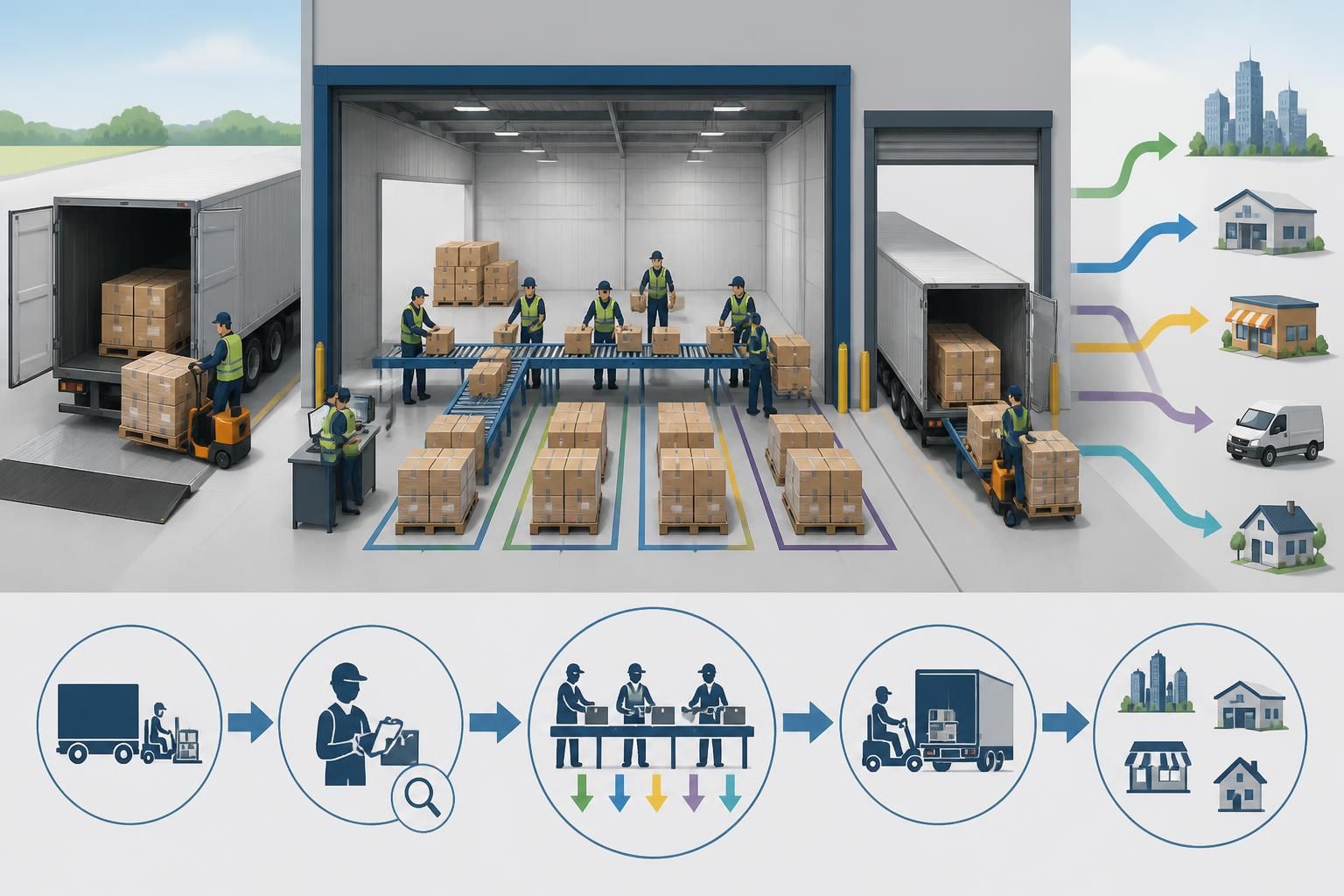
What cross docking means in plain English
Cross docking is a logistics process where inbound goods are received, checked, sorted and moved toward the next outbound step instead of being stored for long periods. In an outsourced fulfillment model, that usually means the warehouse team treats the shipment as a transfer flow rather than as stock that will sit in inventory for a long time.
The idea is simple: keep product moving. A shipment may arrive from a supplier, a production site or another distribution point, then be separated by destination, carrier, channel or customer order and sent out again. That does not eliminate all warehouse activity, but it changes the purpose of the visit. The focus is on speed, accuracy and handover, not on deep putaway.
When cross docking helps fulfillment operations
Cross docking is most useful when products already have a clear next destination. It can work well for replenishment into retail networks, time-sensitive deliveries, multi-stop transport plans and campaigns where the goods should move quickly through the warehouse. It can also help when a brand wants to reduce storage time for items that are not meant to stay in stock for long.
For e-commerce and omnichannel operations, cross docking can be a sensible choice when demand is predictable, when an order or route is already assigned, or when inbound units need to be consolidated before dispatch. It is not a universal replacement for storage, but it can complement storage-based fulfillment by separating the fast-moving transfer flow from the items that need standard inventory handling.
Cross docking is usually not the right choice when inbound goods do not have a confirmed outbound destination, when demand is highly variable, or when items need longer storage before dispatch. In those cases, standard fulfillment or storage-based handling is often a better fit.
If you are comparing operating models, see how cross docking fits into broader outsourced fulfillment on the services page, and use the contact page if you want to discuss your own flow.
Inbound receiving, sorting and outbound transfer
The first stage is inbound receiving. Goods are unloaded, counted, identified and matched with the relevant shipment data. Even in a cross docking process, this step matters because any mismatch here can delay the whole outbound transfer. Once the goods are confirmed, they are sorted by destination, route, customer or service level.
Sorting can be simple or highly structured. Some operations only need basic lane separation, while others need staging by carrier, cut-off time or delivery area. The outbound transfer then becomes the final handover step, whether that means loading a trailer, preparing a parcel handoff or consolidating pallets for a downstream site. The value of cross docking is that the goods spend less time waiting between these steps.
How cross docking can support storage, picking, packing and returns
Cross docking does not remove the need for other fulfillment services. Instead, it can sit alongside them. A warehouse may use storage for slower stock, picking and packing for standard orders, and cross docking for goods that need faster movement. That combination helps keep the right items in the right flow.
For example, some products may arrive for immediate forwarding while other units from the same supplier stay in inventory for later picking. In a mixed operation, the warehouse must separate those paths clearly so that cross docking does not interfere with stock accuracy. Good process design also helps returns processing: returned goods can be inspected, routed to resale stock, repacking or disposal, while transfer-bound goods continue through the outbound lane without confusion.
This is why cross docking is often discussed together with storage, picking, packing and returns processing. The question is not whether one process replaces the others, but how the warehouse arranges them so each order or shipment takes the right path.
What to check before you outsource the flow
Before outsourcing cross docking, review this quick checklist:
- product types and how they should be handled
- inbound frequency and arrival pattern
- outbound destinations and delivery structure
- cut-off times that shape the handover window
- pallet, carton or mixed-unit handling needs
The more precisely the flow is described, the easier it is to judge whether cross docking should stand alone or form part of a broader fulfillment setup.
It is also worth thinking about data quality. Cross docking depends on correct labels, reliable shipment references and clear sorting rules. If those inputs are weak, the process can become slower instead of faster. For that reason, teams often review operational links, receiving logic and transfer points together rather than treating cross docking as an isolated task.
If your main goal is a simpler operating model with less on-site handling, a dedicated fulfillment partner can help decide whether a transfer-first flow, a stock-first flow or a hybrid approach is the better fit. That conversation usually leads to a more useful fulfillment quote than comparing services in isolation.
Cross docking and your next fulfillment quote
If you are evaluating cross docking for your own shipments, Labran Logistics can review the process together with storage, picking, packing and returns handling. The right setup depends on how your goods arrive, how quickly they need to leave and how much of the inventory should remain available for standard fulfillment.
Use the contact form below to request a fulfillment quote for cross docking and related services.