
Ecommerce fulfillment services in Europe: what to look for
Author: Kamil Doroszko · Published: · Last updated:
6 min read
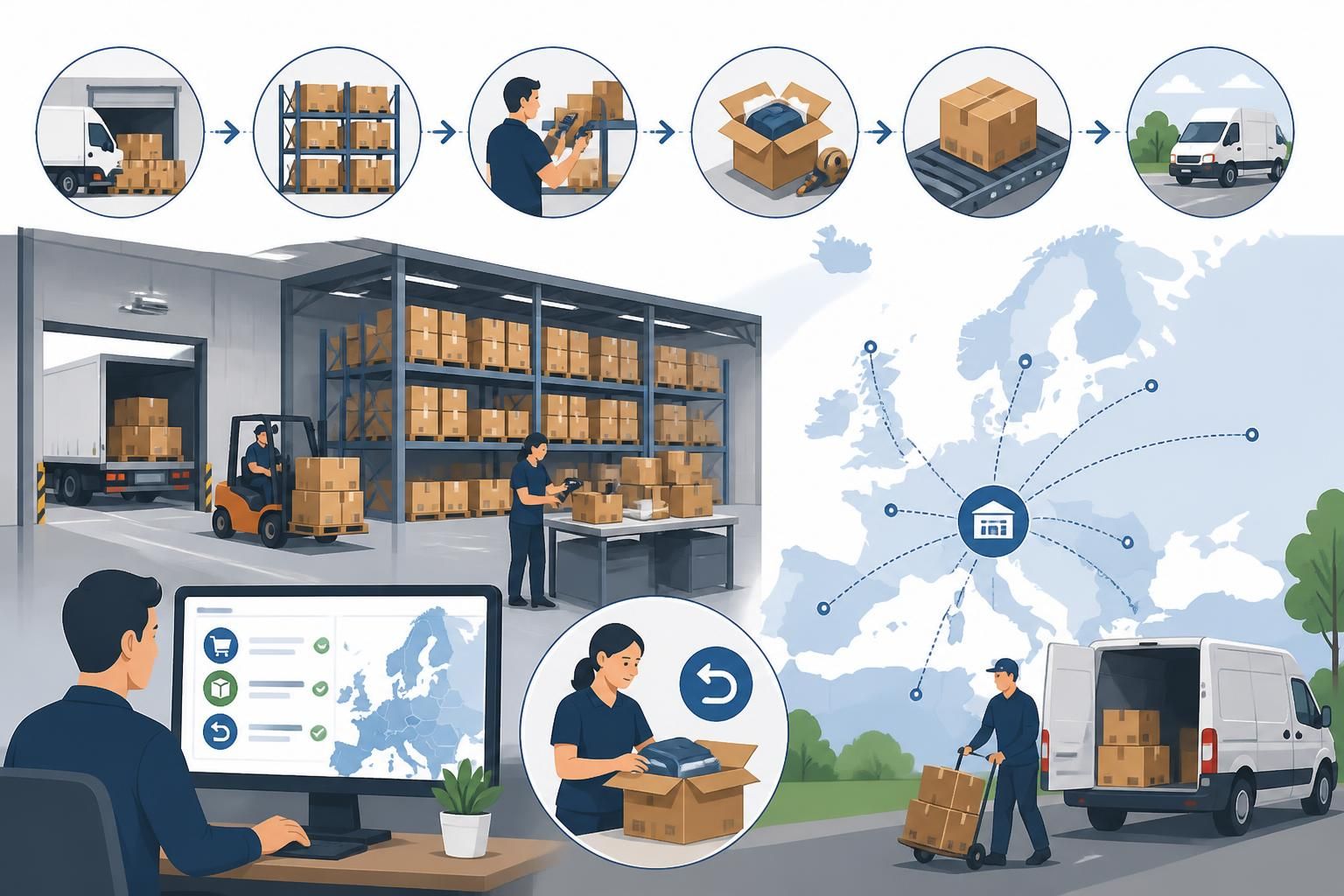
For many ecommerce teams, the search starts with one practical question: which ecommerce fulfillment services in Europe can support day-to-day operations without adding friction? The right provider should help you move orders through a predictable flow, from inbound receiving and storage to picking, packing and dispatch, while also handling returns processing in a way that fits your store and your customers.
Ecommerce fulfillment services in Europe are not only about storing products in a warehouse. They are about connecting your inventory, order flow and carrier network so that the warehouse can turn incoming demand into shipped parcels with less manual work. When a store sells across borders, this operational layer becomes even more important. A provider has to support multiple sales channels, reduce handovers and keep information clear enough for teams on both sides of the process.
What ecommerce fulfillment services in Europe usually include
The basic service scope is easy to describe, but details matter. A useful fulfillment setup usually covers inbound receiving, storage, picking, packing and dispatch. In practice, that means the fulfillment center receives goods, checks them in, places them into the warehouse, picks ordered items, packs the shipment and hands it to the carrier. Some providers also include returns processing, which is often essential for ecommerce because returns can influence customer trust and operational workload at the same time.
When you compare providers, ask how each step is handled in daily work. For example, how is inbound receiving documented, how is inventory updated, and how are order status updates passed back to your store? A provider that handles these steps in a structured way can reduce avoidable exceptions. For an overview of how this service scope fits into a broader operating model, see our services page and the related notes on technology and integrations.
Why European coverage matters for cross-border orders
European coverage matters because cross-border ecommerce often involves more than one customer expectation at once. Buyers want a smooth delivery experience, while merchants need a process that can scale without creating a separate workflow for every market. A provider with European reach can support this by making the fulfillment center part of a wider logistics setup, so orders can be processed consistently even when customers are located in different countries.
Coverage also affects how quickly internal teams can react to changing demand. If your orders come from several markets, it is helpful when the warehouse model supports the same receiving, picking and packing logic for each channel. That does not remove the need for local knowledge, but it can reduce complexity. For brands comparing a service partner, European coverage should be read as an operations question, not just a map question: can the carrier handover, order flow and returns processing stay manageable as sales expand? If you are specifically looking at Fulfillment PL–DE for cross-border fulfillment in Poland and Germany, use our contact page to talk through that in your own case.
How to compare providers: the criteria that usually matter
When buyers search for ecommerce fulfillment services in Europe, they often focus first on price, but the better comparison starts with operating fit. Integration speed is one of the first criteria. If your store, marketplace or ERP needs a long implementation path, the project can slow down before the first parcel leaves the warehouse. Ask how the provider connects systems, what data is exchanged and how changes are handled later. If you are comparing options, you can also review our pricing page alongside these criteria.
Accuracy is another key point. In fulfillment, accuracy means the warehouse can process orders consistently and keep inventory aligned with what is actually available. It is worth asking how order status is updated, how exceptions are detected and how the team handles discrepancies. A provider should be able to explain the practical flow from storage to picking to packing without relying on vague promises.
Returns handling is often underestimated. For ecommerce, returns processing can touch customer service, replenishment and resale decisions. If the process is weak, it can create delays and confusion. Compare providers by asking how returned items are checked, how they are booked back into inventory, and how quickly the next order can use them again when appropriate.
Scalability matters when volumes change. A useful partner should be able to support growth without forcing you to redesign the whole process every time demand changes. This is especially relevant if your store plans seasonal peaks or market expansion. Evaluate whether the warehouse setup, carrier options and team structure can support more orders, more SKUs and more markets while keeping the daily process clear.
Short checklist for comparing fulfillment providers
- Does the provider cover inbound receiving, storage, picking, packing and dispatch in one workflow?
- How quickly can the systems connect, and how is data exchange maintained afterward?
- How is inventory tracked across the warehouse and the store?
- What happens when order status changes or exceptions appear?
- How is returns processing handled and documented?
- Can the setup scale with new markets, more orders and changing demand?
- Is there a clear point of contact for operational questions?
If you are comparing several options, use the same questions for each supplier. That makes differences easier to see and helps separate marketing language from actual process design. It is also useful to look at the provider’s internal knowledge articles for clues about how they think about operations. Our Insights section is a good starting point.
FAQ: common comparison questions
How important is system integration when choosing ecommerce fulfillment services in Europe?
Very important, because the store, marketplace or ERP should exchange order and inventory data smoothly with the warehouse. Strong integration helps reduce manual work and makes order status updates more reliable.
What should I check in returns handling?
Ask how returned items are received, checked and booked back into inventory. A clear returns processing flow helps avoid delays and makes it easier to decide when items can be used again.
Can one setup scale across several European markets?
It can, if the warehouse process, carrier handover and data flow stay consistent as volumes grow. The key is whether the provider can keep the same operational logic while supporting more orders and more destinations.
What a practical next step looks like
Once you have a shortlist, the next step is to map your current operations against the provider’s process. Think about products, order mix, channel integration, returns volume and the markets you want to serve. Then ask whether the fulfillment center can handle those requirements without creating extra work for your team. The best partner is not the one with the broadest vocabulary, but the one whose receiving, storage, picking, packing and dispatch model matches how your store actually sells.
If you want to evaluate Labran Logistics for your ecommerce setup, we can discuss the scope directly and help you decide whether the service model fits your needs.