

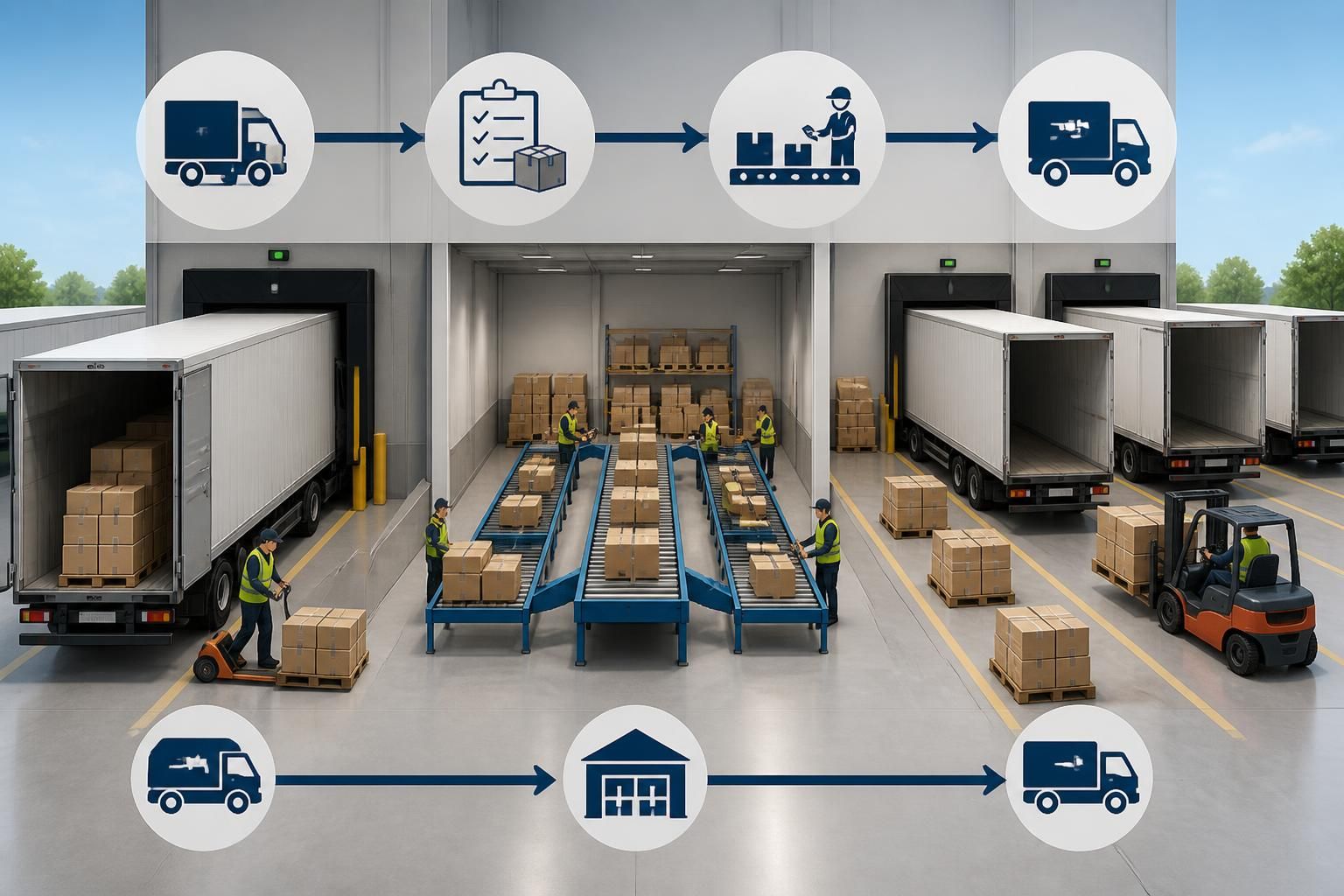
Cross-docking is often discussed as a transport shortcut, but the system behind it is what makes the model work in practice. Below is a clear explanation of the operating logic, where it fits, and what teams should verify before using it in everyday logistics.
What system cross docking means
When people search for system cross docking, they usually want more than a definition. They want to understand the operating model: how goods move from inbound transport to outbound transport without becoming long-term inventory in the warehouse. In simple terms, the warehouse acts as a transfer point. Units are received, identified, sorted by destination or route, and released again with as little dwell time as possible.
This is different from traditional storage-based warehousing. In a classic setup, stock may stay in the facility for days, weeks or longer. In system cross docking, the emphasis is on flow. The process depends on timing, clear data and disciplined coordination between the inbound receiving point, the sorting area and the outbound dock. If one part is delayed, the whole chain can slow down.
That is why the topic belongs alongside broader fulfillment planning rather than being treated as a standalone transport trick. If you are comparing operational models, it may also help to review Labran Logistics’ services and the article on cross docking, which covers the concept more generally.
When this setup is used
System cross docking is usually considered when the shipment pattern makes quick turnover more valuable than storage. It can be relevant when goods arrive already allocated to destinations, when several suppliers feed a common outbound stream, or when the operating objective is to reduce handling steps. The model is also useful where the physical movement of goods matters more than keeping them in the facility for later picking from inventory.
It is often discussed for distribution flows that need consistent timing. For example, incoming loads may be matched with outbound carriers, or products may be split and consolidated into specific dispatch groups. This does not mean the system is right for every business. If demand is volatile, the product mix is complex, or items need longer-term storage and frequent order-level picking, a stock-based model may be more appropriate.
In practice, the best fit is usually determined by the shape of the supply chain, the quality of advance information and the ability of partners to stick to agreed cut-off moments. Businesses that need a broader service picture can also review contact options when planning an operational conversation.
Core steps in the flow
The process usually begins before the truck arrives. The first step is data preparation: expected items, counts, route destinations and loading priorities must be visible in advance. Without that information, the receiving point has to react manually, which increases the risk of rework. Once goods arrive, the inbound receiving stage checks what came in and how it should move onward.
After receiving, items are identified and directed to the next stage. Depending on the operation, this may mean sorting by customer, route, carrier or delivery sequence. The key point is that the warehouse is not acting as a long-term storage zone. Instead, it is making an operational decision: where should each unit go next, and how quickly can it be released?
The final step is dispatch preparation. Outbound loads are assembled, staged and handed over to the carrier. In some flows, the time window between receipt and dispatch is very short. In others, the same-day cycle may still allow for grouping and verification before release. The process works only when the movement from inbound to outbound is tightly controlled and supported by accurate status updates.
For teams building a larger logistics setup, this is where integration matters. A good flow depends on messages, order status visibility and clear exceptions handling. To see the operational foundation that supports this kind of control, review System WMS. If you are mapping the process for an online store or multi-channel operation, the article about ecommerce fulfillment can provide wider context around warehouse-based order flow.
Benefits and operational tradeoffs
The main benefit of system cross docking is speed. Goods spend less time sitting in the facility, which can support fast movement and reduce unnecessary storage dependency. It can also simplify the route from receiving to dispatch because the same unit does not need to travel through several separate stock-handling stages.
Another advantage is potential process discipline. A cross-docking system forces clear planning, because every delay becomes visible very quickly. That visibility can help teams improve communication between transport, warehouse and customer service. It may also support smoother use of dock doors and more predictable carrier handovers when volumes are stable and pre-planned.
At the same time, there are tradeoffs. The model is sensitive to timing errors, incorrect labels and incomplete shipment data. It can also be less forgiving when volumes are uneven, because the facility needs enough space and coordination to buffer exceptions without turning the operation into a storage-heavy process. In other words, the efficiency gain comes with higher dependence on planning quality.
Companies should also remember that not every product is suitable. Fragile, serialised or highly varied goods may need extra verification steps. If the operation requires picking from stock, staged replenishment or more complex returns processing, a different flow may be safer. The right answer depends on how much control the business has over inbound information and outbound timing.
Questions to ask before implementation
Before choosing a system cross docking model, it helps to ask practical questions rather than only technical ones. Are inbound shipments predictable enough to be matched with outbound transport? Is destination data available early enough to sort goods without delay? Can the business handle exceptions when one truck is late or one line is missing? Are the docks, staff and information flow ready for rapid turnover?
It is also worth checking how the model fits with customer promises, carrier schedules and seasonal peaks. A cross-docking setup may work well for one product group and poorly for another. That is why a pilot or limited-scope implementation is often safer than a broad rollout. The model should be evaluated against the real shipment profile, not against an abstract idea of speed.
When the business is ready to discuss a specific flow, the next step is usually to define the scope of service, the inbound and outbound rhythm, and the handling responsibilities. You can start that conversation through the contact page or by reviewing the broader service overview first.
In short, system cross docking is about designing a controlled transfer system, not simply moving parcels faster. It works best when data is clean, timing is disciplined and the warehouse role is clearly defined. If those conditions are present, it can be a strong operational fit. If they are not, the better answer may be a more storage-oriented fulfillment model.